How much aluminum is per pound will depend upon the market you choose to procure the metal from, and will vary accordingly, with primary aluminum available at the London Metal Exchange at a price point of around $1.44 per pound. In contrast, the delivered US price, inclusive of the Midwest premium, is estimated at around $2.40 per pound.
This guide covers all of those aspects of pricing: the price at the exchange, the delivered price, the price of scrap, the price of semi-finished product, and even the cost of extrusion, enabling you to set a price for your purchase or sale without simply relying on one number.
Current Aluminum Market Price Per Pound
Aluminum pricing is quoted in U.S. Dollars per metric tonne on the London Metal Exchange and is approximately $1.44 per pound, based on a cash price of $3,180 per tonne.
Buyers in the United States pay more for aluminum than the exchange price due to an additional regional premium.
Price of Aluminum Per Kg and Per Ton
The aluminum market price today consists of two parts:
- LME Cash Settlement – the global benchmark price of P1020 primary ingot, at $3,150-$3,200 per tonne as of the beginning of 2026.
- Regional premium: the additional charge for delivering the metal physically into a specific market. For example, US Midwest Premium hit a historic high of around $2,182 per tonne in early 2026, crossing the mark of $1.00 per pound for the first time.
Combined, the sum becomes the “all-in” price in excess of $5,340 per tonne, or about $2.42 per pound – nearly 70% higher than the price paid by a buyer who would purchase the metal only through the LME. This is the right answer to the question “Why is aluminum so expensive?”
When trying to find out how much aluminum is per pound today, remember that both parts change on a daily basis. Prices more than 48 hours old become unreliable for purchasing purposes.
Primary Aluminum vs. Scrap Aluminum Pricing
Costing miscalculations often arise from conversion calculations, especially where the metric tonne (2,204.62 lb) and the US short ton (2,000 lb) are involved.
| Unit | LME basis (global) | US all-in basis (delivered) |
| Per pound | ~$1.44 | ~$2.42 |
| Per kilogram | ~$3.18 | ~$5.34 |
| Per metric tonne | ~$3,180 | ~$5,340 |
| Per short ton (2,000 lb) | ~$2,885 | ~$4,845 |
The cost of aluminum in dollars per kilogram is just the cost of a tonne, divided by 1,000. One should always specify whether aluminum costs X dollars per tonne or X dollars per short ton — the difference is about 10%.
Primary Aluminum vs. Scrap Aluminum Pricing
The price of the primary ingot is quoted on the exchange. The price of scrap is quoted at a discount to the exchange price, with the level of discount based upon the cost of bringing the material back up to alloy specification.
Clean scrap, in one alloy only, which can be charged directly into the remelt furnace, will trade near primary. Scrap with paint or attachments and mixed scrap will trade significantly lower than primary.
How Much Is Scrap Aluminum Worth Per Pound?
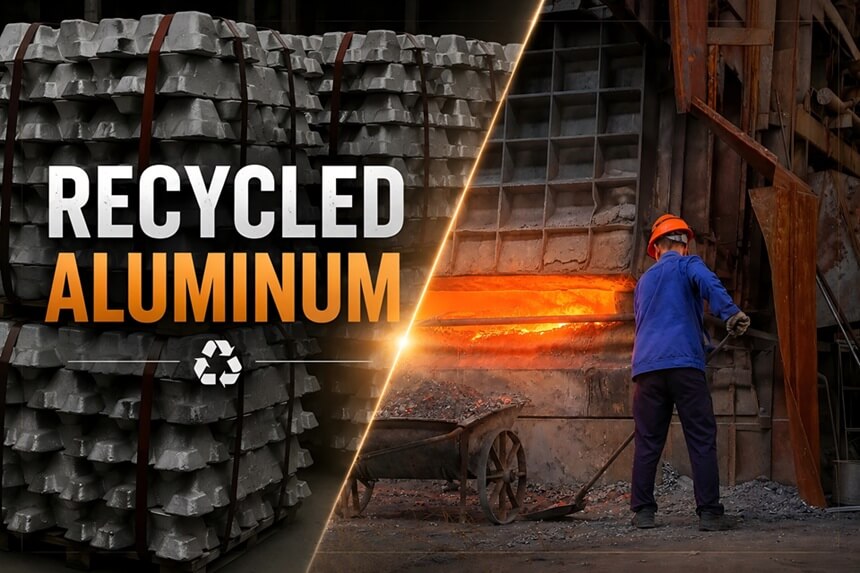
Recycled aluminum sells for about $0.20 to $1.60 per pound in the USA, where clean 6063 extrusion is the most valuable end of the spectrum, while turnings or iron breakage is the least valuable. It is critical to remember that the yard buys grades, not the weight.
When figuring out how much scrap aluminum is worth, one should remember that the yards do not buy “aluminum”; they buy specific grades.
Aluminum Scrap Price by Aluminum Type
| Scrap grade | Typical US range ($/lb) | Notes |
| Aluminum 6063 extrusion (clean, bare) | $1.14 – $1.57 | Highest common grade; window and frame stock |
| Clean auto wheels (alloy 356) | $1.10 – $1.40 | Must be free of tires, weights, and valve stems |
| 5052 plate | $1.25 – $1.32 | Marine and structural sheet |
| Painted aluminum extrusion | $1.04 – $1.10 | Coating adds melt loss |
| Dirty aluminum extrusion | $0.60 – $1.00 | Thermal breaks, steel screws, gaskets |
| 6061 structural | $0.75 – $0.90 | Angle, channel, bar |
| Siding and gutters | $0.70 – $0.87 | Nails and caulk downgrade the load |
| Cast aluminum | $0.50 – $0.83 | Housings, engine parts, cookware |
| Aluminum cans (UBC) | $0.55 – $0.80 | Baled loads are priced higher than loose loads |
| Turnings and chips | $0.20 – $0.43 | Requires drying and specialized furnace handling |
Regarding how much aluminum is in aluminum cans per pound, used beverage cans are not considered an aluminum grade but a separate line of merchandise according to rolling mill demand. At around 32 cans per pound, a grocery bagload yields a couple of dollars.
And regarding the aluminum scrap price per pound at the gate, it’s also dependent upon quantity. Loads of less than 100 lbs are usually sold at the floor price at the yards; that’s why the amount of aluminum per pound at the scrapyard is always below average prices.
Three steps will increase your bottom line when figuring out how much aluminum is per pound of scrap:
- Separate extrusion from castings and sheet prior to weighing.
- Strip away steel fasteners, plastics, and rubber thermal breaks and seals.
- Load up to a full container load, and keep material dry – moisture is taken off as weight or outright refused.
How Much Does Aluminum Cost by Grade and Product Form?
The price of aluminum increases with each step of the process beyond the smelting operation. Ingot is the least expensive, billet has additional cost due to alloying and casting, and mill products have additional costs associated with rolling or extruding the product.
This tiered pricing system is the proper way to answer the question of how much aluminum costs.
Aluminum Ingot Price
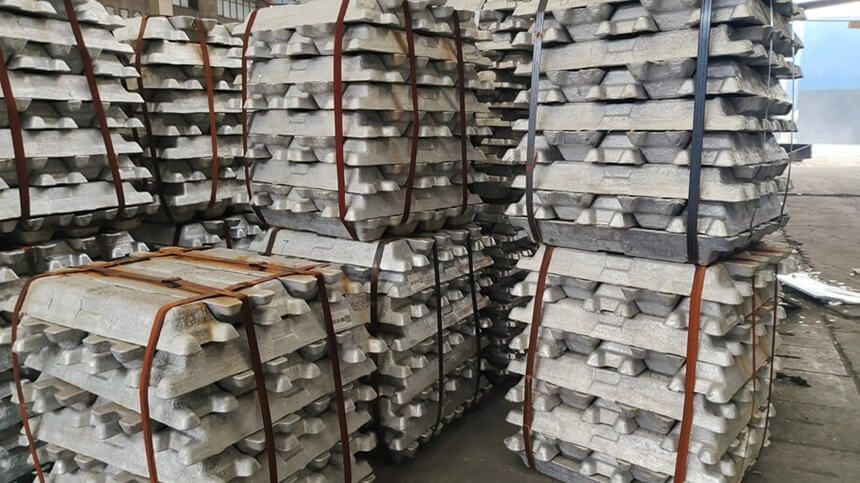
The aluminum ingot price for P1020 primary — 99.7% purity — is the LME cash price plus the regional premium, at around $2.40 per pound delivered Midwest. The secondary alloy ingots, like A356.2, which use scrap metal as input, have a separate quote and are always lower than primary.
Aluminum Billet Price
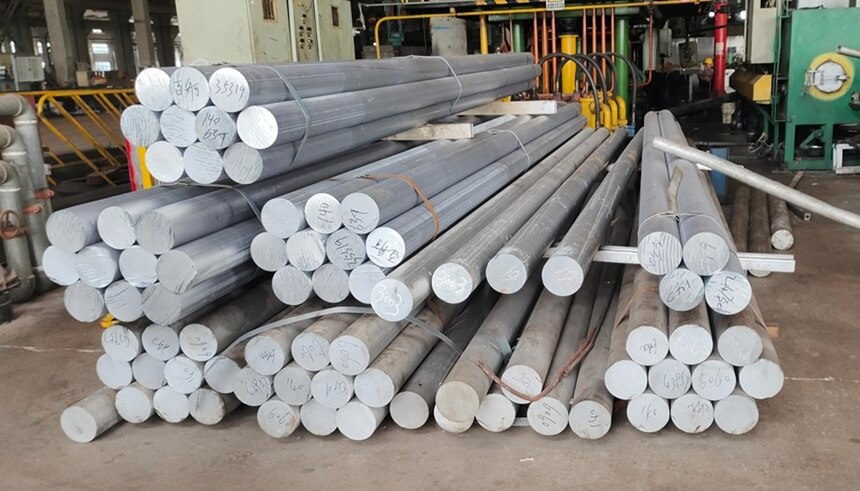
The price of the aluminum billet is equivalent to the price of the P1020 delivery plus the additional charge for billet, which consists of alloying, casting, homogenization, and sawing. This additional charge usually ranges from 10 to 20 cents per pound, depending on circumstances.
Homogenized billet commands a premium over as-cast billet since it is defect-free during extrusion.
6061 Aluminum Price
The 6061 aluminum price is higher than that of 6063 because 6061 contains more magnesium and silicon; extrusion takes place at higher pressure; and it is usually available in T6 temper that goes through separate solution heat treatment and artificial aging.
The 6063 aluminum price is lower per pound due to quick extrusion, thin wall capability, and improved anodization finish.
Sheet, Plate, and Bar Price Comparison
- Sheet (less than 0.25 inches) – Very expensive per pound due to high cost of rolling; expensive when thin or coated.
- Plate (0.25 inches and above) – Conversion per pound is cheap compared to sheet; tool steel, such as MIC-6, is expensive.
- Bar and Rod – Cost lies somewhere in between the two; Cold Finished and Precision Ground are expensive.
How Much Does Aluminum Extrusion Cost?
The cost of 6061/6063 aluminum profiles typically ranges from $0.90 to $2.50 per pound for common extrusion sizes. However, the delivery cost in the US market has risen owing to the current Midwest premium. The cost of dies is charged separately from the extrusion cost.
The final cost of a extrusão de alumínio personalizada depends not only on aluminum price, but also on profile complexity, tooling requirements, finishing, and secondary fabrication.
The cost of aluminum extrusion includes four components:
- Metal value –cost of the billet, which is measured against the exchange rate and premium.
- Conversion cost – press time, which is affected by the complexity of the profile, wall thickness, circumscribing circle diameter, and press yield.
- Acabamento –base mill finish, but with additional costs for anodização ou revestimento em pó on a per-pound or per-square-foot basis.
- Tooling – costs of dies, which could be capitalized on the order or paid up-front.
If an aluminum profile price quotation does not include these four components, you will not know whether the increase in price is caused by the move in the metal market or a change in margins.
At Wellste, our quotations are clear and transparent. Any price adjustments caused by increasing aluminum raw‑material costs will be fully communicated to you ahead of time.
Aluminum Extrusion Price Per Pound vs. Per Foot
This per-pound pricing occurs due to the metal being the major price driver. Per-foot pricing will depend on the profile’s per-foot weight multiplied by the per-pound price.
Profile weight of 0.75 lb/foot with a price of $2.20 per pound will result in a per-foot price of $1.65 without considering the finish cost and freight. Profiles having nearly similar outside dimensions but different wall thicknesses will vary greatly in per-foot price.
This is because how much aluminum extrusion costs depends greatly on the weight of the material; therefore, design optimization through thinning of non-structural walls, symmetry, and avoiding unnecessarily deep hollows is the major cost-saving factor during custom aluminum extrusion. Professional aluminum extrusion suppliers do the design for manufacturing analysis and identify areas where certain tolerance or radius is limiting press speed.
Downstream fabricação de alumínio operations of cutting, punching, machining, and assembly are considered per operation costs and should be considered differently from the extrusion.
5 Factors That Can Change Aluminum Price
The price determinants of aluminum are as follows: energy prices, government policies on trade, the balance between demand and supply, exchange stocks, and premiums by region. Understanding what affects aluminum prices is useful in the decision-making process when making purchases and forming contracts.
1. Energy Costs
The energy consumption during the production process of aluminum is around 13-15 MWh per ton of output. Electricity is the largest part of production cost; therefore, increasing costs for natural gas and electricity in Europe and Asia mean increasing metal cost as well.
2. Trade Policy and Tariffs
The tariff on aluminum imports into the United States under Section 232 is 50 percent. As a result, the domestic market is completely disconnected from the international metal benchmark. This resulted in setting a record value for Midwest premium.
3. Supply and Demand Balance
The constraint in production in China at about 45 million tons makes it difficult for the producer to meet the rising demands. As far as the demand drivers are concerned, these are the construction sector, lightening of automobiles, and investments in grid systems.
4. Exchange Inventories
The inventories on the LME exchange fell below 300,000 tons mid-2026 and this was the lowest since 2022. The low visible inventory shows that pricing is sensitive to disruptions in the supply chain.
5. Regional Premiums and Freight
Premiums depend on availability of supply, freight, and duties for a certain market. Premiums might change faster than the spot prices and today they account for more than 40% of the total delivery cost in the US market.
Examining the price evolution of aluminum for the last 20 years, we notice this pattern: record-high price in 2008 at $3,380/ton, 10 years of flat trading due to excess supply from China, record-high price in March 2022 at $4,073/ton due to energy crisis in Europe, and discrepancy between US and world prices since 2025 due to tariffs.
Conclusão
Aluminum pricing is no longer static. There are exchange prices, regional delivery prices, scrap prices at various grades, and finished product prices that require additional expenses to convert into the latter two. To refer to each of those as “the price” will make costing errors inevitable.
As far as procurement is concerned, the key things to do are benchmarking of the contract to a known price, separation of metal price from the conversion costs in all quotations, and premium as a risk line separately. Sellers of scrap can demand higher prices depending on the grade and size of the load, but not the timing of the market.
Perguntas frequentes
Why does aluminum price fluctuate?
There are many factors that cause aluminum‑price fluctuations, including raw‑material supply, trade policies, regional conditions, and global demand.
In addition, aluminum production uses large amounts of electricity, so changes in energy costs also affect aluminum prices. Demand from various industries such as automotive and construction can also drive aluminum‑price movements.
Is 6061 aluminum more expensive than 6063 aluminum?
That is true under normal conditions. 6061 aluminum alloy has relatively high magnesium and silicon content. This means additional heat treatment is needed to achieve higher strength. 6061 is generally chosen for structural applications requiring high strength.
Whether you select 6061 or 6063 depends largely on several factors, including your end‑use application, extrusion complexity, and strength requirements.
Why is aluminum extrusion more expensive than raw aluminum?
Aluminum extrusion involves additional manufacturing processes. The final price covers raw‑material costs, processing expenses, tooling charges and more.
By contrast, primary aluminum only reflects the price of the base aluminum raw material.
Does surface finishing affect aluminum extrusion cost?
Yes. Common surface finishes include anodizing, powder coating, PVDF coating, and wood‑grain finishes. Costs depend on your finish type, color requirements, surface area, and quality standards.
Therefore, surface treatment has a significant impact on the final price of aluminum extrusions.
Can Wellste help optimize aluminum extrusion costs?
Yes. Wellste provides end‑to‑end project optimization from design through to production. Our designers will first review your drawings and refine them where appropriate. Taking material selection, surface‑finish requirements and secondary‑processing needs into consideration, Wellste helps you develop cost‑effective aluminum solutions.
 Português do Brasil
  English
  Русский
  Español
  العربية
  Français
  日本語
日本語  한국어
한국어  Deutsch
  Türkçe
  Italiano